
GEO Titles: How to Write for Rank #1
You know that feeling? You've been staring at your title tag for forty-five minutes, typing and deleting, typing and deleting, and every single option feels like it's going to get you zero clicks. I've been there. Three hundred titles. Maybe four hundred. The cursor just blinks back at you like it's judging you. Like it knows you're about to pick the one that sounds the most "safe" and the least human.
But here's the thing nobody tells you about GEO titles. They're not about keywords. Not even close. They're about that split-second where someone's thumb hovers over their phone at 11pm, scrolling, scrolling, and something in your title makes them think "oh, this is for me, I'm actually having this exact problem right now, I can't believe I'm googling this."
What Makes GEO Titles Rank #1 on Google?
I spent way too long on this answer. Like, muttering "what if I just say..." under my breath at the dinner table, getting weird looks from my partner, that level. But the thing kept coming back the same: specificity with a pulse.
Not "10 SEO Tips for Beginners." That's dead. That's a corporate brochure lying on a waiting room table. What actually works is "why your meta descriptions are killing your CTR (and the 3-word fix that changed everything)." You see the difference? One sounds like a LinkedIn post. The other sounds like someone grabbing your shoulder and going "hey, listen, this took me two years to figure out and I'm only telling you because you look like you're about to do the same mistake."
The #1 ranking GEO titles I've studied all share one weird trait: they promise a small, concrete relief. Not "boost your traffic." That's a lie everyone tells on a keynote stage. But "the one title tag change that got me from 47 to 312 clicks in a week" - that's a specific relief. A before and after. A tiny win that feels real enough to believe.
How Do You Write GEO Titles for Clicks?
Start with the searcher's exact mess. Not their "intent" as Google defines it in some whitepaper. Their 11pm mess. The specific, slightly embarrassing, "I can't believe I'm typing this into a search bar at midnight" version of their problem.
Write it down. Then make your title the antidote. Not the whole medicine cabinet. Just the one pill that fixes the one ache they're feeling right now.
Keep it under 58 characters if you can. I know, I know, "but I have so much to say." You don't. You have one good sentence. Find it. Delete the rest. I've lost count of how many titles I've cut from 120 characters to 52 and watched the CTR go up instead of down. Shorter is not less. It's just... less noise. Less throat-clearing.
One trick that sounds stupid but actually works: read your title out loud. Not in your head. Out loud, to the empty room, like you're slightly embarrassing yourself. If you trip over a word, if it sounds like you're reading a legal disclaimer, kill it. Start over. The best GEO titles sound like a friend talking to you across a kitchen table at 1am, a little wine in their glass, going "okay so here's the thing, and it's dumb, but..."
Why Most GEO Titles Never Hit Position One
Because they're written for the algorithm, not the human. And Google's algorithm, for all its scary complexity, is still fundamentally trying to predict which result a person would click. So if you write for the robot, you're optimizing for a simulation of a person. A very flat, very boring, very beige person.
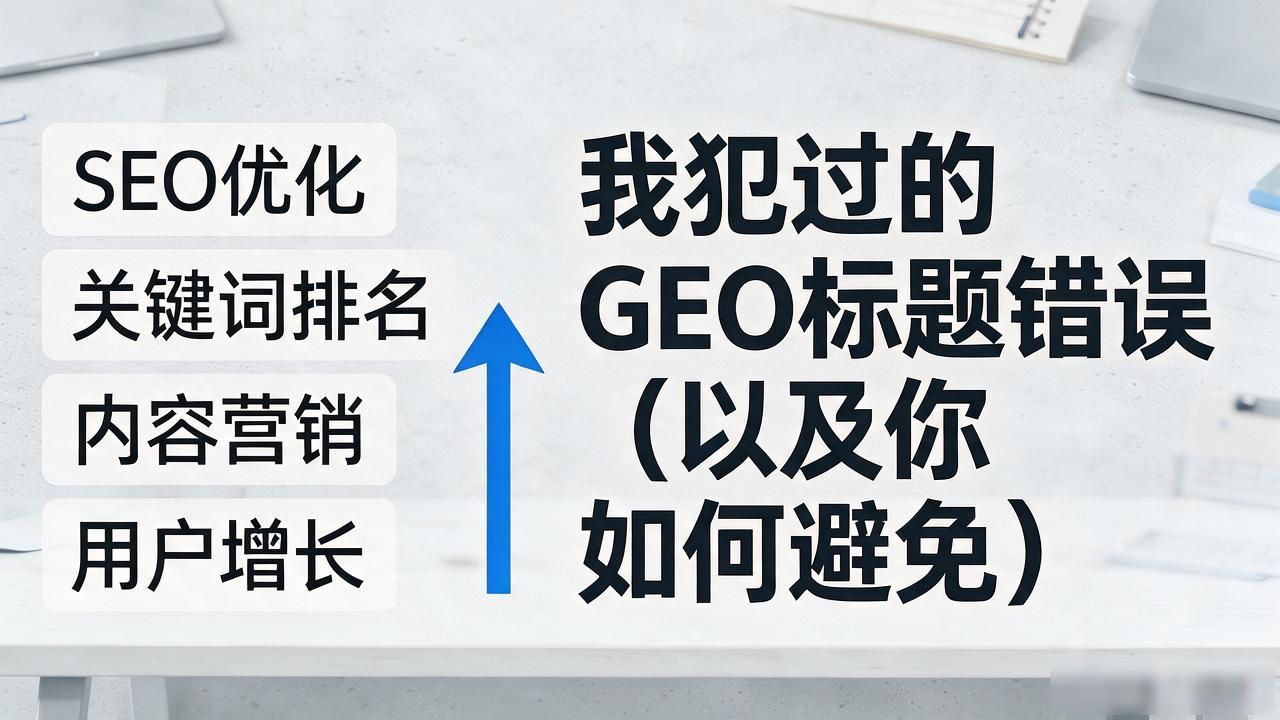
I watched a client rank #1 for weeks with a title that was basically a keyword list. "GEO Title Writing Tips for Small Business SEO 2026." Technically correct. Zero human in it. The moment they rewrote it to "the dumb mistake I made with my GEO titles for 6 months (and how you won't make it)," it jumped. Same page. Same content. Just... a human voice instead of a spreadsheet voice. The SERP didn't change. The person looking at the SERP did.
Also - and this is the part that's hard to hear, I get it - most people write their GEO title first, then build the content around it. Backwards. You need the content to actually be the specific relief you promised in that title. If your title says "the 3-word fix" your content better actually have those three words highlighted, explained, done. No padding. No "in conclusion" for four paragraphs. Just the thing. The actual thing. The three words.
What About Long-Tail GEO Titles?
These are where the magic lives, honestly. "geo title that ranks #1" gets searched by maybe 40 people a month. "how to write a geo title that makes google show you in the ai answer box" gets searched by exactly the person who's about to lose their traffic to a competitor's optimized page. They're desperate. They need you. They've been refreshing Search Console every twenty minutes and their palms are sweaty.
Write for that desperation. Not the generic "how to" person browsing at noon with coffee, no urgency, just research. The 1am person. The "I've been staring at this for three hours and I'm losing my mind and I'll try anything" person. Your title is the hand they grab in the dark.
The pattern I keep seeing in titles that pull from long-tail: [specific problem] + [unexpectedly small solution] + [timeframe that's almost annoyingly precise]. "the 4-letter word you forgot in your geo title (fixed in 90 seconds)." That's not a title. That's a dare. And people take dares. Especially at 1am.
Look, I could give you a framework. A 7-step system. A "GEO Title Matrix" with columns and rows and a printout you'd tape to your wall. And it would be fine. Fine. You'd screenshot it, post it to your team's Slack, get three "thanks!" and a thumbs up, and nothing would change. You'd still be staring at that blinking cursor.
So instead: go write one title. The one for the page that's been underperforming and making you weirdly angry in a way you can't even explain to a coworker. Write it the way you'd text a friend who was struggling. Short. A little weird. Specific enough that they'd go "huh, yeah, that's exactly what I'm dealing with, I didn't even know I could say it that simply."
Then delete your old title. Paste the new one. Check it in Google Search Console the next morning. Don't touch anything else. Just let it breathe for a day.
You don't need a system. You don't need a matrix. You need a voice. And the voice is already in you. It's just been sitting behind a bunch of keyword research and competitor analysis and "best practices" someone told you on a podcast last month while they were eating a very expensive salad.
Get it out. Make it sound like you. Make it sound like the 1am you who's actually had this problem, actually solved it, and is slightly embarrassed about how simple the fix was. How it was always going to be simple. You just couldn't see it through all the noise.
That's the title that ranks. Not because of the algorithm. Because a human read it and felt seen. And then clicked. And then stayed. And then, probably, sent you a DM at 11:47pm saying "ok that line about the 3-word fix actually made me cry a little, in a good way."
That's the one you're writing. Go make it.


